Fan culture can cause amazing movements within the pop
culture industry. If it were not for their dedication and involvement with
spreading their personal favorite shows, characters, and other fandoms many
media would not become as well known and widely mainstream as they are today.
Henry Jenkins
explains in his book Spreadable Media “Spreadable Media examines
the nature of audience engagement, the environment of participation, the way
appraisal creates value, and the transnational flows at the heart of these
phenomena. It delineates the elements that make content more spreadable and
highlights emerging media business models built for a world of participatory
circulation.”
Free! or ‘swimming anime’ started out as a one minute
commercial during Anime Mirai, a film festival in Japan that showcases recently
graduated students and new workers in different anime studios. The participants
are to create a short film to showcase their animation and artistic skills.
One particular animation by a worker at Kyoto Animation and
Animation Do resonated with all the little Yaoi fangirls of Tumblr. Fans wanted
to see more from this animation so much that they started a petition on Tumblr
to have this short film become a full animated series. Once the petition proved
to be growing in success fans started to create character profiles for the characters
of the short film, giving them names, personalities, even defining some
relationships between the characters. The following for these textual poachers
became so large that the writers of what was soon to be known as Free! took some
of these character profiles and implemented them into the animation.
Henry Jenkins explains the success of media, like Free!, on
its spreadability. Spreadability is defined as the ways content can travel
through social media. Spreadability does not just apply to t.v. shows and
fandoms, it can be utilized for understanding how people spread their ideas and
the implications these activities have for business, politics and everyday
life.
This means the control of which media takes off is within
the hands of the fans rather than the marketing team. If a fandom can gain
enough proactive fans that spread their fandom across social media then it is
more likely to gain a larger following, thus becoming more main stream. Without
media spreading to other potential fans it cannot grow in popularity.
This is what I have been working on throughout the week. It is my first draft lyrics for my parody 'I've Gotta Sew' of 'Domino'. I also discovered that I am not that good of a singer and am now searching for a vocalist who can perform my parody for me. The video is the instrumental version of the song with lyrics to parallel the lyrics I've written.
I look sexy and kawaii
everyone’s attention on me
flash of camera everywhere
Cat ears in my hair
Dressing up around conventions like there’s nobody there
Taking pictures of otaku, making everyone stare
Do you sew? That costume’s out of control
Ooh, ooh, ooh, ooh
we can cosplay all night
Damn this costume is tight
sewin’ it on
Ooh, ooh, ooh, ooh
I'm starting to feel numb
keep ricking my thumb
Otaku, come on!
Ooh, ooh, ooh, ooh
There’s no time for sleeping tonight
costume’s not ready to be shown
nothing seems to be going right
with this cosplay, now I’ve gotta sew
Every hem needs to be sew tight
When I’m done I will let you know
there will be no sleeping tonight
Can’t stop now because I’ve gotta sew
Fabric spread everywhere
I’m in need of a prayer
Why won’t this piece just stay
costume’s in total dismay
Styling my wig, its not working, I think I need hairspray
new anime distracting me from my own cosplay
I should sew, procrastination
Ooh, ooh, ooh, ooh (Its out of control)
We can cosplay all night
Damn this costume is tight
Sewing it on
Ooh, ooh, ooh, ooh
I'm starting to feel numb
keep pricking my thumb
Otaku, come on!
Ooh, ooh, ooh, ooh
Pre-reg badge pick up is tonight
guess ill wait in the line tomorrow
nothing seems to be going right
with this cosplay, now I've gotta sew
Forget thread, I’m losing this fight
Cant deal with the stitches anymore
Heat the glue gun, this isn't right
We’ll just hope that no one will know
Ooh, got my tickets to the con
Ooh, I’ll be there with my costume on
Ooh, I cant get contacts in right
Ooh, the corset makes my head light
Ooh, body paint is starting to crack
Ooh, times is rushing I’m losing track
Ooh, let’s get dressed up tonight
Ooh-taku-taku
Ooh, ooh, ooh, ooh
Let’s get dressed in cosplay tonight
Make this one the best I’ve ever sewn
We’ll be dancing in the rave lights
Make it worth the time I’ve had to sew
Every hem seems to be sewn (glued?)
tight
We wont stop until they make us go
There will be no sleeping tonight
Gotta start new cosplay, I’ve gotta sew
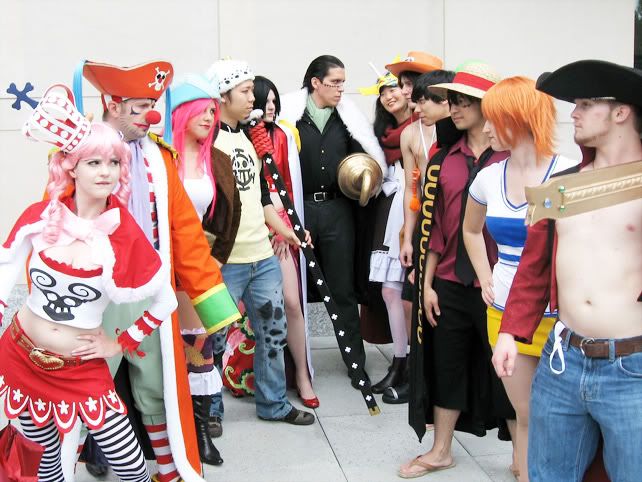
The cosplay community and otaku fan culture in America is
still considered a relatively new subculture. Japanese anime has only been in
the states for about 40 years. The massive social following and created
subculture has only been known of in the last 15 years. One theory that ties
into my Capstone project is the Media Dependency Theory.
Media Dependency Theory according to communicationtheory.org
“An internal link between media, audience and large social system. The audience
learning from the real life is limited, so they can use media to get more
information to fulfil their needs. An extensive use of media generates
dependent relation in audience and also Media can able to creating dependence
relationship with target audiences to achieve their goals by using their media
power.”
There are three degrees of Media Dependency Theory:
·Individual: An individual will become more dependent
on media, if the medium satisfies their needs. An example of this would be an
individual who identifies themselves as part of the otaku subculture but does
not share that subculture with another person who is physically in their life.
They would then turn to the internet for connectivity with the community or
education of culture. It is also the internet that is the source of their media
fix.
·Social Stability: According to communicationtheory.org
“The individual will reconsider their beliefs, practice and behaviors when
strong social change, conflicts, riot or election which will force to
re-evaluate and make new decisions. During this time the dependency is
dramatically increased, because there is a strong need for information, support
and advice.” This would occur when the individual has a large enough supporting
group of other individuals with the common interest. The group would feed off
of other individuals and the social norms within the anime to create their own
social norms that are similar to those in the anime. This is typically where cosplay comes into play. The individual seeks for another way to immerse themselves, attending conventions and cosplaying is one way. Because they are comforted
by their social group they also now feel the confidence to express such social norms
that would otherwise be unacceptable in our culture. The individual re-evaluates
how they behave and speak to suit those within the group. Because the
individual gets sucked into the subculture they also tend to become more emerged
and look for more information on the culture.
·Active Audience: The individual decides the amount
of media they depend on. They can come to the decision through factors such as
economic conditions, society, and culture. If their need is fulfilled elsewhere
then their dependency will decrease. If an individual only received their anime
fix through one source, that being the internet, then they join an anime club
they may feel fulfilled and chose not to expand into the subculture anymore. If
their primary culture conflicts too much with the subculture they feel they
should identify with them they will not immerse themselves into the subculture
as much as other individuals. They best example of this is the difference
between those who enjoy anime and those who live by it or wear it on their sleeve.
The American Otaku subculture gains all of their knowledge from
the same source, Anime and manga. There are different genres and with each
genre comes a new subculture and set of social norms. Although there may not be
two or more people in the sub culture or otaku community physically living
within a common area they can still participate online and at conventions. Over
all there are similar messages and tropes being transmitted through the anime
that has created the giant community.


 Henry Jenkins explains the success of media, like Free!, on
its spreadability. Spreadability is defined as the ways content can travel
through social media. Spreadability does not just apply to t.v. shows and
fandoms, it can be utilized for understanding how people spread their ideas and
the implications these activities have for business, politics and everyday
life.
Henry Jenkins explains the success of media, like Free!, on
its spreadability. Spreadability is defined as the ways content can travel
through social media. Spreadability does not just apply to t.v. shows and
fandoms, it can be utilized for understanding how people spread their ideas and
the implications these activities have for business, politics and everyday
life.